
 Rhonda Handy
Lending and Immigration Status
 Heather Stahl : October 02, 2026
Explore how immigration status impacts lending compliance, ability-to-repay assessments, and fair lending obligations in the evolving regulatory...

Note: This article includes insights from Director of Digital Services Crystal Steinbach, VP - Risk and Compliance Rhonda Handy, Compliance Specialist Heather Stahl and Content Manager Ryan Pleggenkuhle.
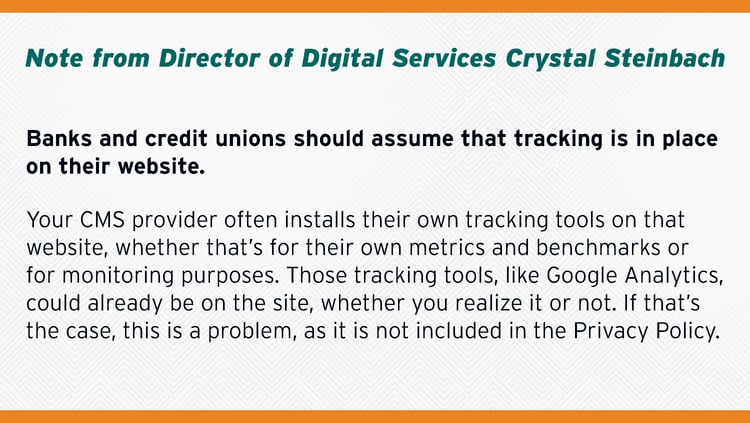
Recently, banks and credit unions have been targets of lawsuits alleging violations of various California privacy laws regarding the use of website cookies and tracking pixels.
Does your institution have proper safeguards in place?
There has been a surge of lawsuits (primarily by California law firms) against financial institutions over the last few months, from large national banks to smaller community banks and credit unions. The suits allege violations of a combination of California privacy laws, primarily the California Consumer Privacy Act (CCPA), involving data collection and tracking.
These California privacy laws apply to any California resident who visits or browses your website!
Examples of California residents’ rights under their laws:
Some of the lawsuit claims include that websites:
How Mills Can Help
Our Digital Team can perform a website audit to assess your cookie and tracking technologies and advise accordingly. If you're unsure what tracking technology may be on your site, let's connect.

 Heather Stahl : October 02, 2026
Explore how immigration status impacts lending compliance, ability-to-repay assessments, and fair lending obligations in the evolving regulatory...

 Rhonda Handy : March 28, 2025
Learn how to navigate digital advertising compliance challenges with insights on ads, disclosures, and best practices for staying compliant.
 Rhonda Handy : November 12, 2025
Learn why the U.S. is retiring the penny and what it means for cash transactions and financial institutions. Discover the benefits and challenges of...