
3 min read

Driving Marketing ROI Through Marketing Automation

Driving Marketing ROI Through Marketing Automation
6:16

Marketing ROI has long been one of the most challenging things for financial institutions to clearly define, measure and communicate. Leaders want proof that marketing dollars drive real results. Reporting on marketing activities doesn’t cut it.

The good news: Modern marketing automation makes it possible to move beyond surface-level metrics and into true platform ROI and campaign ROI.

When implemented correctly, marketing automation connects strategy, execution, data and revenue in a way that allows organizations to answer the most important question: Is our marketing actually working?


Going Beyond the Click

Traditional marketing metrics like opens, clicks and impressions provide valuable insights, but they don’t tell the whole story. And they don’t help FI leaders understand if marketing is working.

Thankfully, there are ways to enhance our understanding by offering a more comprehensive view of campaign effectiveness and consumer engagement.

  1. Centralizing consumer and prospect data
  2. Connecting campaigns to conversions and revenue
  3. Tracking engagement across channels and over time
  4. Creating a clear line of sight from marketing effort to business outcome


SM-POST_Mills_Driving Marketing ROI_2026April_BlogContent 1 (1)


Both measures matter. It’s easy to overlook platform ROI, but as leadership assesses budgets, tools and tech stacks, marketing platforms can face intense scrutiny. Let’s ensure they shine and demonstrate their true value to the business!


The Cost of Delay

One of the most overlooked aspects of marketing ROI is the cost of delay.

When campaigns are delayed due to limited internal bandwidth or competing priorities, we end up with:

  1. Delayed ability to track conversions accurately
  2. Missed insights into what drives revenue
  3. Lost opportunities to cross-sell or upsell early in the customer lifecycle
  4. Reduced lifetime value due to late engagement

Every month without live automated campaigns is a month of missed learning and missed revenue.

Marketing automation delivers the highest value when it is live, learning and continually improving. The sooner campaigns are launched, the sooner organizations start measuring campaign goals and ROI.


Should we run this campaign?

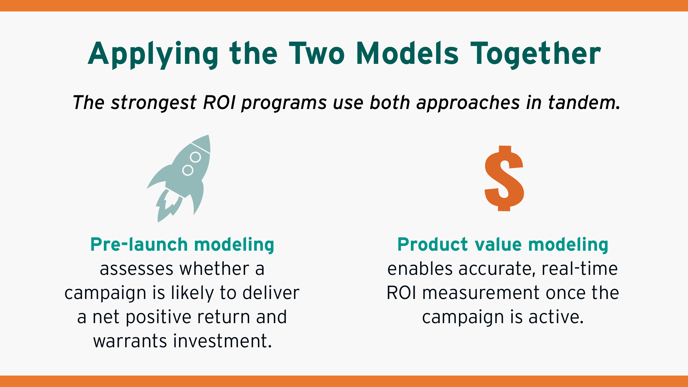
Before launching any campaign, marketing leaders should answer a crucial question: Will this generate a net positive return? That's where a pre-campaign ROI framework comes into play.


SM-POST_Mills_Driving Marketing ROI_2026April_BlogContent 2 (2)


Our assumptions play a vital role. Gather financial data, review past campaign performance and incorporate relevant benchmarks. It doesn’t have to be perfect; assumptions matter more than precision. To avoid chasing campaigns that look exciting on the surface but fail to produce meaningful impact, keep your performance assumptions conservative.

Example:

  1. Qualified audience: 10,000 contacts annually
  2. Conversion rate: 3%
  3. Annual conversions per campaign: 300
  4. One-time campaign cost: $25,000
  5. Campaign life: three years


Feasibility ROI Formula:

ROI = (Estimated Three-Year Incremental Revenue - Campaign Cost) / Campaign Cost x 100

The feasibility ROI formula on a campaign cannot clearly show a positive return under midpoint assumptions; it is often a signal to reconsider the audience, offer or execution before proceeding.


What is That Conversion Worth?

Product value calculations serve a different purpose than campaign feasibility modeling.

Rather than answering whether a campaign should exist, product value calculations answer how much revenue a single conversion is worth once the campaign is live. These values become inputs that power real-time ROI calculations inside marketing automation and analytics tools.

A clear product value model incorporates:

  1. Direct income from interest and fees

  2. Customer retention-driven lifetime value

  3. For deposit products, indirect value related to lending capacity and funding stability

We recommend maintaining a centralized worksheet that is regularly updated with the latest rates, balances, fees and retention assumptions. If you haven’t set one up yet, feel free to reach out! We’re happy to help.

Once established, product values can be used dynamically to:

  1. Live campaign performance reporting
  2. Automated ROI dashboards
  3. Ongoing optimization and forecasting

This separation is critical. Campaign feasibility determines whether to pursue a campaign. Product value calculations determine how to measure success after launch.


SM-POST_Mills_Driving Marketing ROI_2026April_BlogContent 3


Decision-Making Made Much Easier!

Marketing automation does more than measure ROI; it facilitates better decision-making.

  1. Double down on high-performing campaigns
  2. Refine targeting and messaging based on real outcomes
  3. Forecast revenue impact with confidence
  4. Align marketing, sales and leadership around shared goals

Most important, it transforms marketing from a cost center into a growth engine and value center.


Say Goodbye to “I think it’s working”...

Marketing ROI is not a one-and-done calculation. It changes as campaigns run longer, data gets cleaner, and customers behave in ways that either confirm or challenge your assumptions.

Teams that invest early in automation and move quickly can learn faster and adjust their campaigns in real-time, not after the fact. A good way to think about it is this: the first campaign answers whether an idea works, but every campaign after that makes the next one smarter. Over time, marketing stops being a guessing game and starts becoming a repeatable growth engine.

The result is not just better marketing performance, but clearer, more credible proof of marketing’s value to the business.

Want help driving ROI through marketing automation?


Contact Us